Discover our Special Issue – MAG Expertises #3 Deafness / Hearing Impairment
What is hearing impairment?
Hearing impairment is characterized by a partial or total reduction in the ability to hear sounds, as well as by changes in how sounds are perceived.
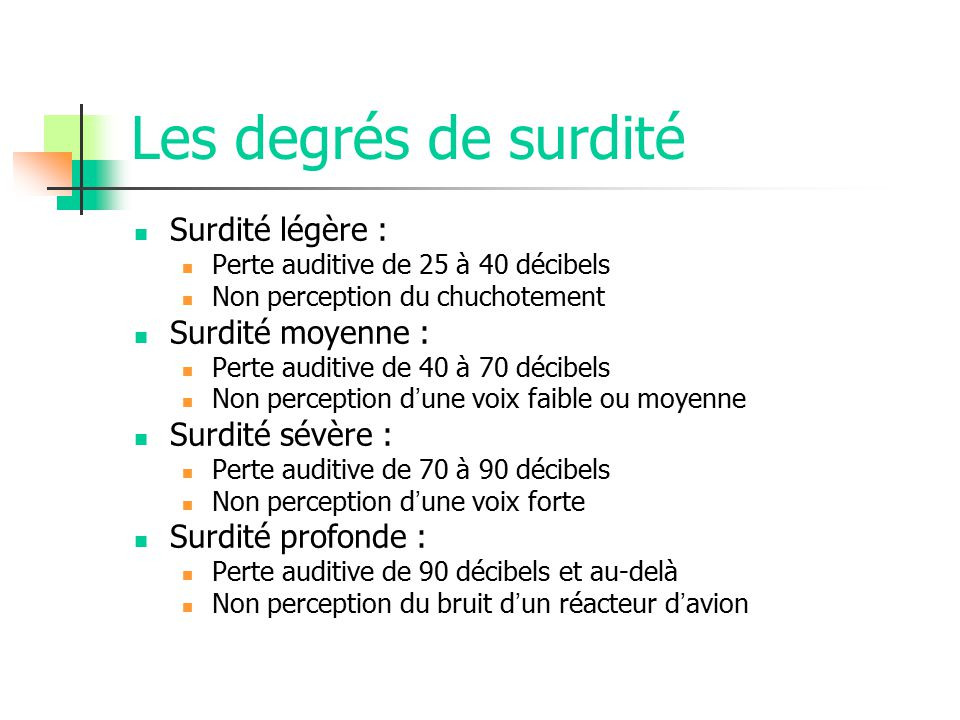
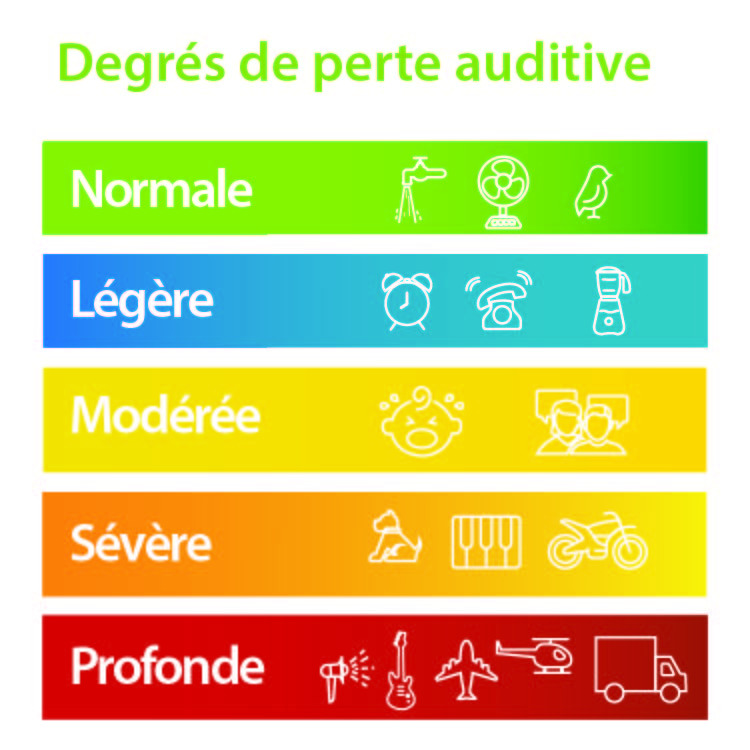
Hearing loss is measured in decibels, based on an average taken across both ears.
- Loss of 20 to 70 decibels: these individuals are described as hard of hearing.
- Deafness is considered: “mild” from 25 to 40 decibels,
- “moderate” from 40 to 70 decibels.
- Loss greater than 70 decibels: these individuals are described as deaf.
- Deafness is considered:“severe” from 70 to 90 decibels, “profound” from 90 decibels and above.Deafness can occur at any stage of life and may be progressive.
Hearing impairment represents a different reality for each person. Its consequences vary depending on the degree of deafness, the age at which it occurs, access to hearing aids, the type of education received, and the preferred mode of communication.


LSF: French Sign Language
French Sign Language (LSF) is a language used by many Deaf people. According to various studies, the number of Deaf people who use it in France is estimated to be between 51,000 and 100,000. This language provides fluency in expression and comprehension and allows users to feel comfortable in their linguistic interactions with others. It is not a universal language; there are many sign languages around the world.
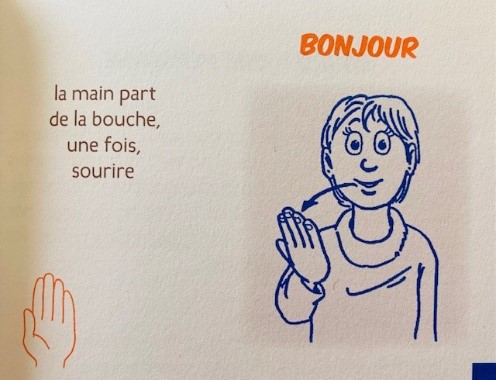
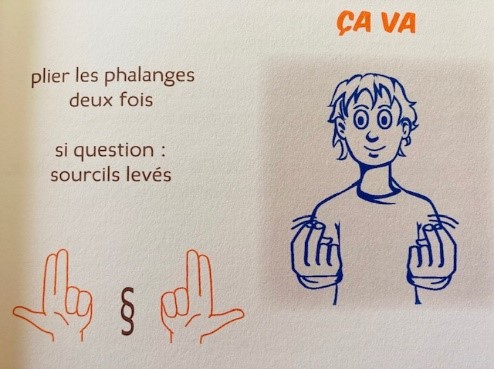
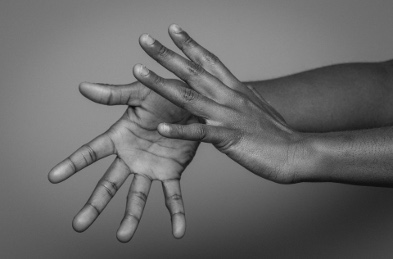
Sign languages are expressed using the hands and the entire upper body. They consist of signs that are grammatically organized in space. Each sign is a combination of several elements: the handshape and orientation (i.e., the form and position of the hand), movement, the location of the sign in space, and facial expression.
Examples of signs:


Extracts from “Signe particulier : Sourds”, Edition Monica Companys
LSF makes it possible to express all types of messages, with full nuance and across multiple registers. Everything can be expressed in sign language: humor, expressions, narratives and dialogues, poetry, and more. It is possible to discuss philosophy or use scientific and technical terms—there are even sign-based wordplay equivalents to spoken puns.
Using LSF as a first language can help and facilitate later access to the French language for Deaf people (supporting reading through translation into LSF, as well as written and spoken expression). Educational work helps establish connections between French and LSF.
The history of French Sign Language is unique, as its teaching and use were prohibited in France for more than a century. LSF has been officially recognized as a language of the French Republic since the law of February 11, 2005.
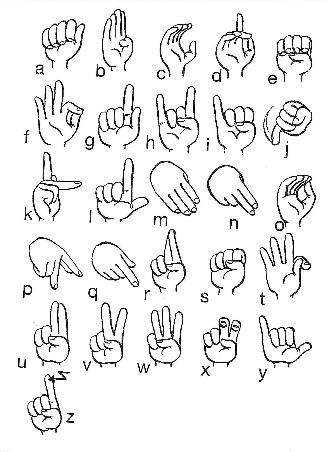
The French Sign Language alphabet (fingerspelling)

Cued Speech (“LPC”)
Cued Speech is a technique that complements the information provided by lip-reading and consists of accompanying speech with small hand movements near the face.
Each syllable is characterized by a hand gesture corresponding to a vowel, while the fingers form a cue for the consonant.
Cued Speech facilitates language comprehension and the learning of vocabulary and syntax. It allows children to monitor their articulation and to acquire spoken language.
Children who are hard of hearing often perceive sounds in a distorted way. This technique helps support lip-reading, but many difficulties remain, such as identical lip movements for different words.
For example, try saying “mom” and then “dad,” or “I’m eating fries” and “I’m walking very fast” in front of a mirror—you will notice that the lip movements are the same.
This is why hand cues draw the child’s attention and allow them to distinguish lip movements and associate them with the corresponding sounds.
Is Cued Speech the same as sign language?
No. The coded hand movements used in Cued Speech only have meaning when combined with spoken language. When using Cued Speech, you are addressing your child in spoken French.