
What is autism?
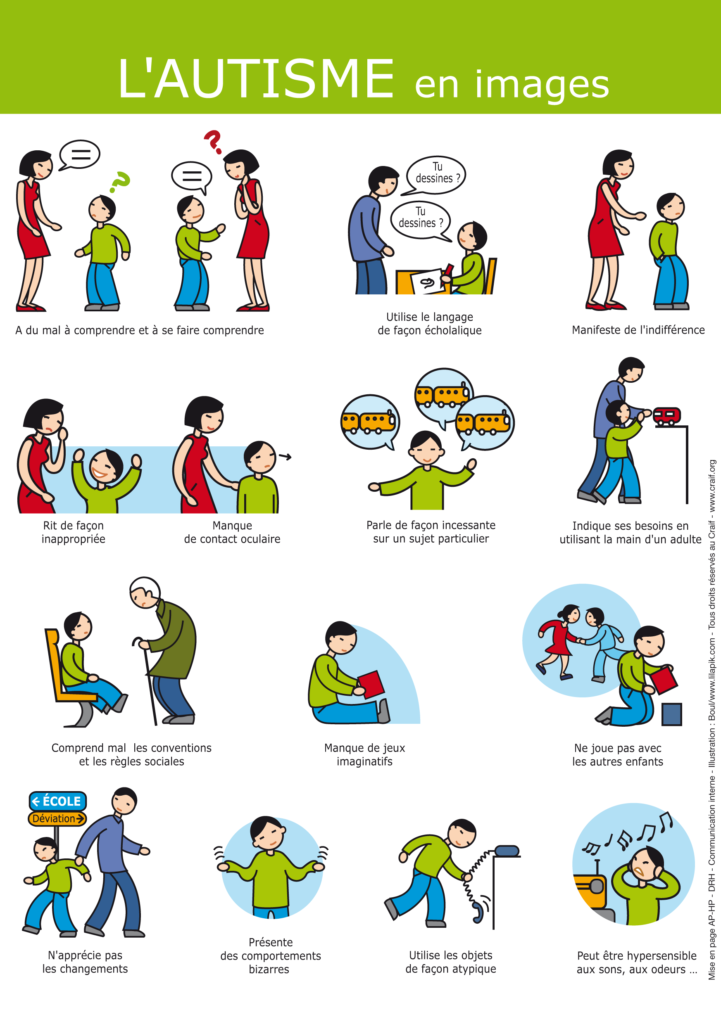
Autism is a multifactorial neurodevelopmental condition characterized in the individual by difficulties in social interaction, communication, sensory processing, and by restricted interests. Because of these impairments, it is considered a pervasive developmental disorder.
This may lead to deficits in social, cognitive, emotional, and sensory functions, particularly in terms of generalization, automatization of behaviors, social routines, and understanding/expression.
Regarding sensory functions, all senses can be affected, as well as vestibular and proprioceptive sensations.
Social and relational difficulties make certain traditional educational approaches less suitable.
These various impairments mean that the social and cultural environment is often not well adapted for individuals, leading to significant anxiety that can sometimes be difficult and complex to manage in interactions with others and in the broader social world.
This disorder is therefore an aspect of the individual’s functioning, but variations related to personal “character,” individual specificities, and experiences result in a diversity of people with Autism Spectrum Disorder (ASD) as wide as that of the general population: “Everyone is different.”
As a result, this condition may lead to a disability (under French law) of varying degrees and can be associated with other difficulties and/or conditions, such as epilepsy, eating disorders, or sleep disorders. Therefore, support provided to autistic individuals must be varied and individualized.
 Causes of autism
To date, no single cause of autism has been identified.
It is likely that multiple different factors contribute to the development of autistic traits.
Current research strongly suggests that there are neurological and genetic bases.
Diagnosis: how and why?
Currently, the diagnosis of autism is based on identifying a number of characteristic behavioral signs.
When a minimum number of these signs are present, a diagnosis of autism is made.
Autism is a lifelong condition that affects individuals in very different ways. The benefits of early, appropriate support are well recognized.
An autistic person can continue to make progress throughout life, including in adulthood.
What are the warning signs?
- No babbling, pointing, or other social gestures by 12 months
- No words by 18 months
- No combination of words by 24 months
- Loss of language or social skills at any age
Below is a study aimed at better understanding the pain experienced by autistic patients.
Autisme-HOSPIMEDIA.pdf (2954 downloads )Discover our MAG Special Issue Expertises #1 – Autism Spectrum Disorders (ASD):
