
What is deafblindness?
“A specific sensory disability that causes significant isolation and results from the combined loss or impairment of both hearing and vision. It significantly affects communication, socialization, mobility, and daily life. The consequences and impact vary considerably from one person to another, particularly between those who are born with a dual sensory impairment and those who acquire it during their lifetime. Most people retain some degree of functional vision and/or hearing. They may sometimes use visual or auditory aids to optimize the use of their existing abilities. The impact of deafblindness on adults and children is linked to communication, connections and support from family and friends, access to appropriate educational and developmental opportunities, as well as recreational and leisure activities.”
Would you like to learn more? Watch the 4 CRESAM videos
Deafblindness and communication
Deafblindness and access to information
CRESAM
CRESAM is the National Resource Center for Rare Disabilities specializing in deafblindness. Its mission is to support anyone with a dual sensory impairment—both visual and auditory—across France.
Discover CRESAM
Some testimonials from people living with deafblindness and their families
Testimonial from Angélique – audio version
Testimonial from Jocelyn’s parents – audio version
Testimonial from Florent – audio version
World Deafblindness Awareness Day
June 27 is World Deafblindness Awareness Day, commemorating the birth of Helen Keller, the renowned author and American activist who became deaf and blind as a baby.
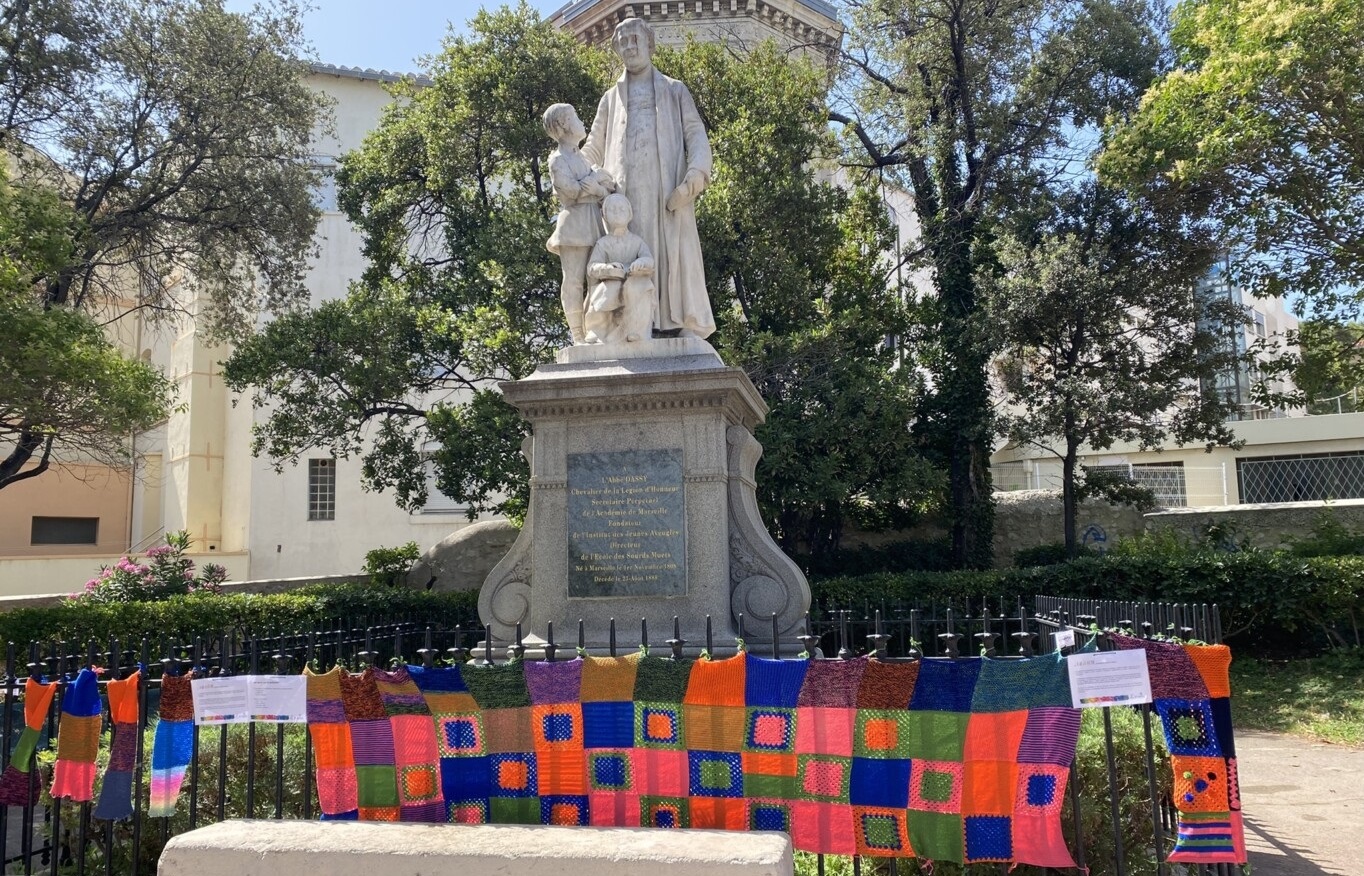
On this occasion, Yarn Bombing initiatives (decorating urban installations with knitted or crocheted yarn) are organized nationally and internationally to raise public awareness of this rare disability.
This playful form of street art helps raise awareness of deafblindness in a creative way, using knitted, crocheted, or wrapped yarn to decorate objects in public spaces.
It makes a often invisible disability visible in a colorful and creative manner, while also offering a tactile and exploratory activity for people living with deafblindness.
